Traveling with a cane
Whether you're catching a flight, taking a road trip, or exploring a new city on foot, the right walking cane can make travel easier and more enjoyable. The wrong one becomes one more thing to manage. Here's what to know about traveling with a cane, how common cane types compare, and why a folding cane like Rise is built for life on the move.
Common cane options for travel
- Standard single-point canes. The classic adjustable aluminum or wooden cane is simple and sturdy, but it doesn't get any shorter. At full length it has to ride along beside you, lean against tables, or lie across your lap.
- Offset canes. A bent shaft places your weight over the tip for extra support. They're great for stability but awkward to pack and store.
- Quad canes. A four-point base stands on its own and offers maximum balance support, but the wide base adds bulk and weight that make travel harder.
- Traditional folding canes. Multi-section folding canes collapse for storage, but many feel loose when extended, rattle when folded, or take fiddling to set up.
Why Rise is built for travel
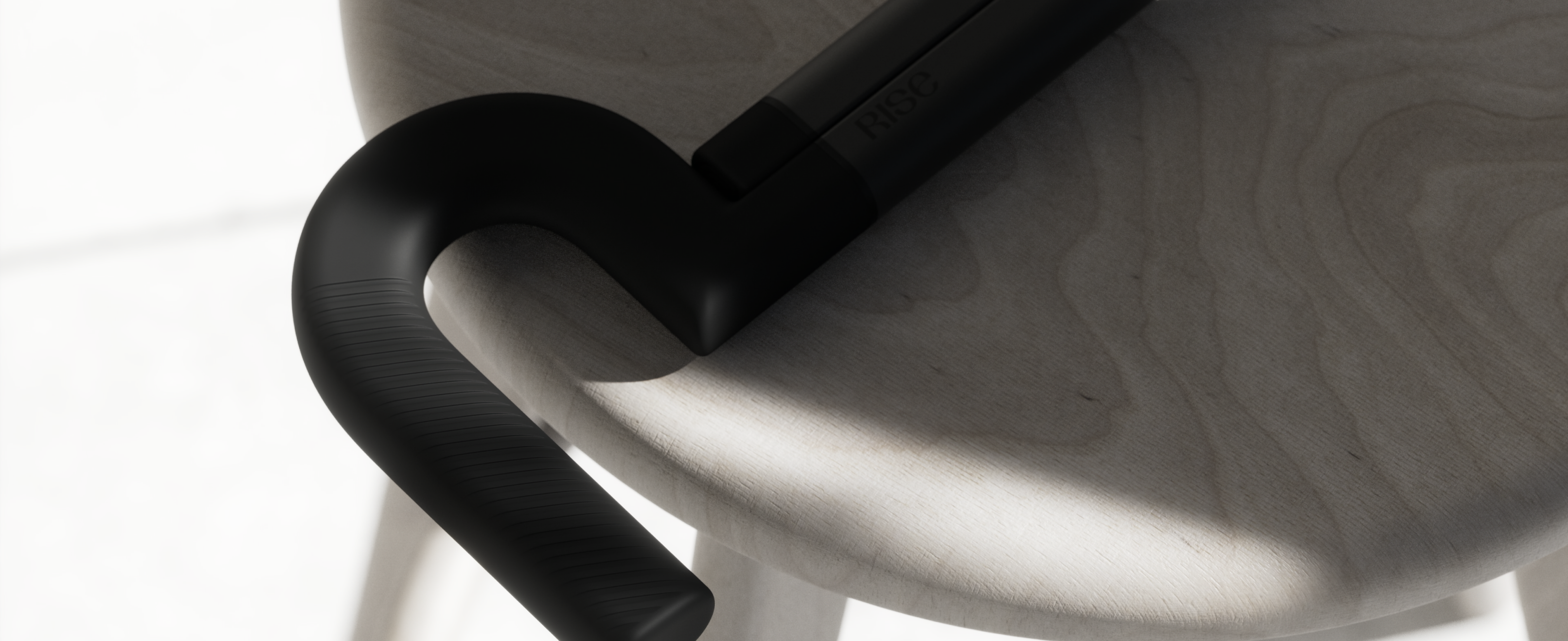
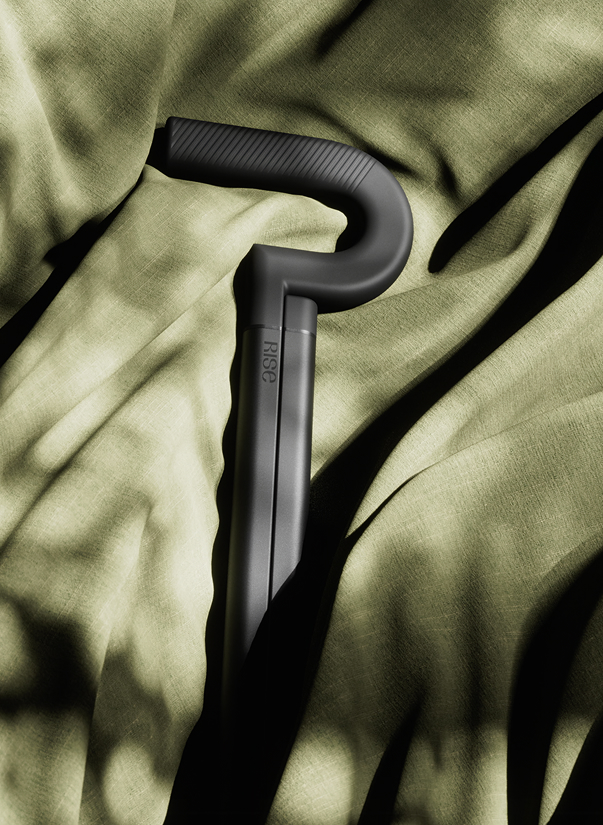
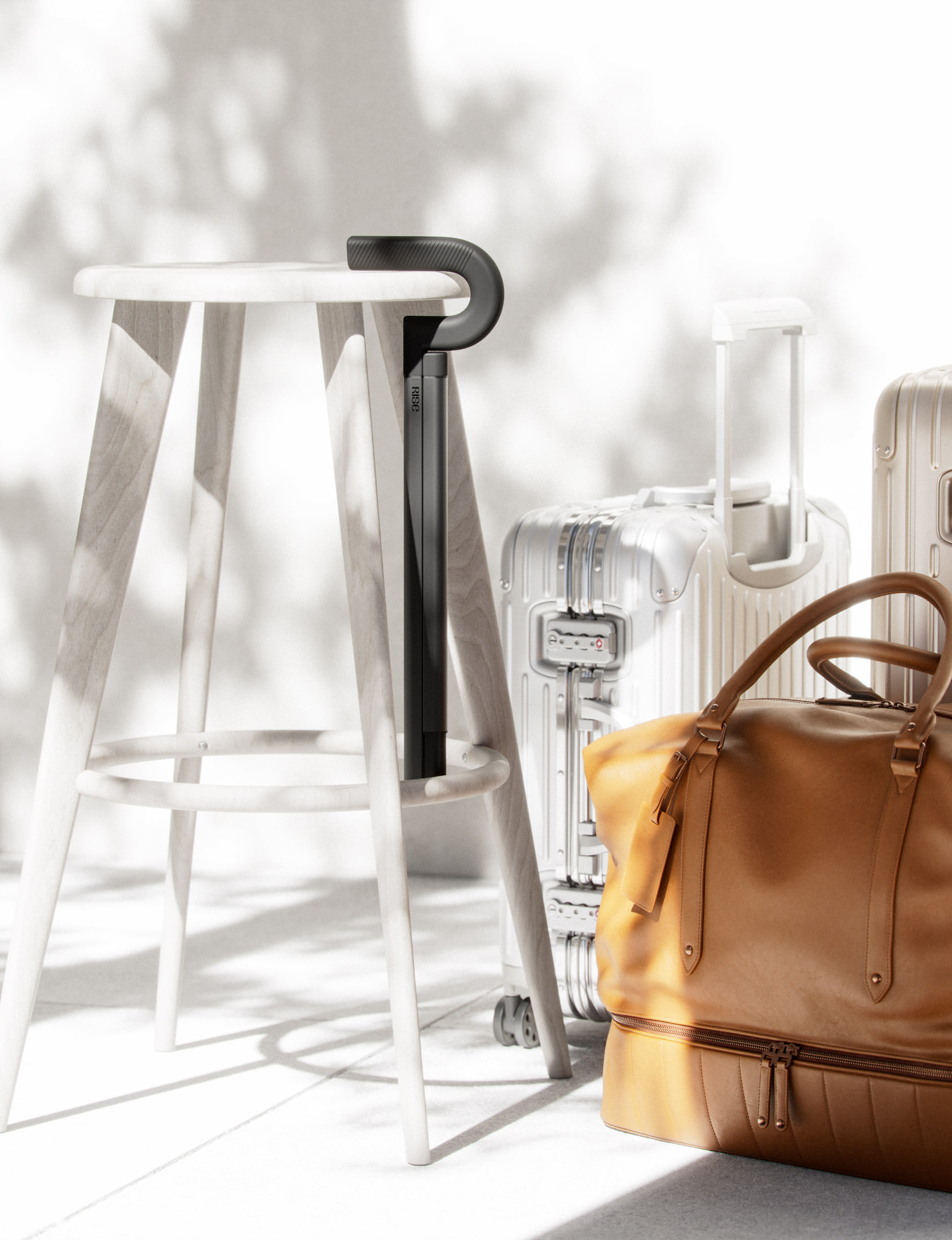
Rise is built to come with you. It folds down to roughly 19 to 21 inches depending on size, so it tucks easily into a carry-on, tote, or backpack instead of becoming one more thing to carry.Out and about, that folding design earns its keep. Sit down at a restaurant, slide into a car, or settle onto a train, and Rise folds away in seconds, then extends back to full length just as fast when you stand. An internal elastic cord guides the sections into place, and a hidden magnet keeps it closed when folded. No leaning it against a chair, no watching it clatter to the floor.
Unlike many folding canes, Rise doesn't compromise on support. Its extruded aluminum shaft is chosen for strength at low weight, the handle places your hand directly over the shaft, and a soft silicone grip stays comfortable on long days. Rise has been independently tested to ISO 24415-1 and EN 1985 walking-aid standards, and it comes in four sizes for a proper fit.
Flying with a cane: what to know
- Security screening. TSA allows canes and walking sticks through security checkpoints once they've been inspected. Expect it to go through the X-ray or be checked by hand.
- Carry-on allowance. In the US, mobility aids like canes generally don't count toward your carry-on limit, so you can bring your cane plus your usual bags.
- On board. Fold your cane before you stow it in an overhead bin or under the seat so it settles flat and stays out of the aisle.
Tips for smooth travels
- Keep the foot tip clean. Smooth airport and hotel floors are most slip-resistant when the tip is free of grit. Wipe it down if it picks up debris.
- Replace a worn tip. The Rise foot tip is replaceable, so if it wears from heavy travel you can swap in a fresh one and keep your grip.
- Plan for rest stops. Long terminals and city walks add up. Map out seating and take breaks before you need them.
- Check your fit before you go. A cane at the right height makes long days easier on your wrist, shoulder, and back.